Universities beyond the Arctic Circle
Education and Science in Murmansk region
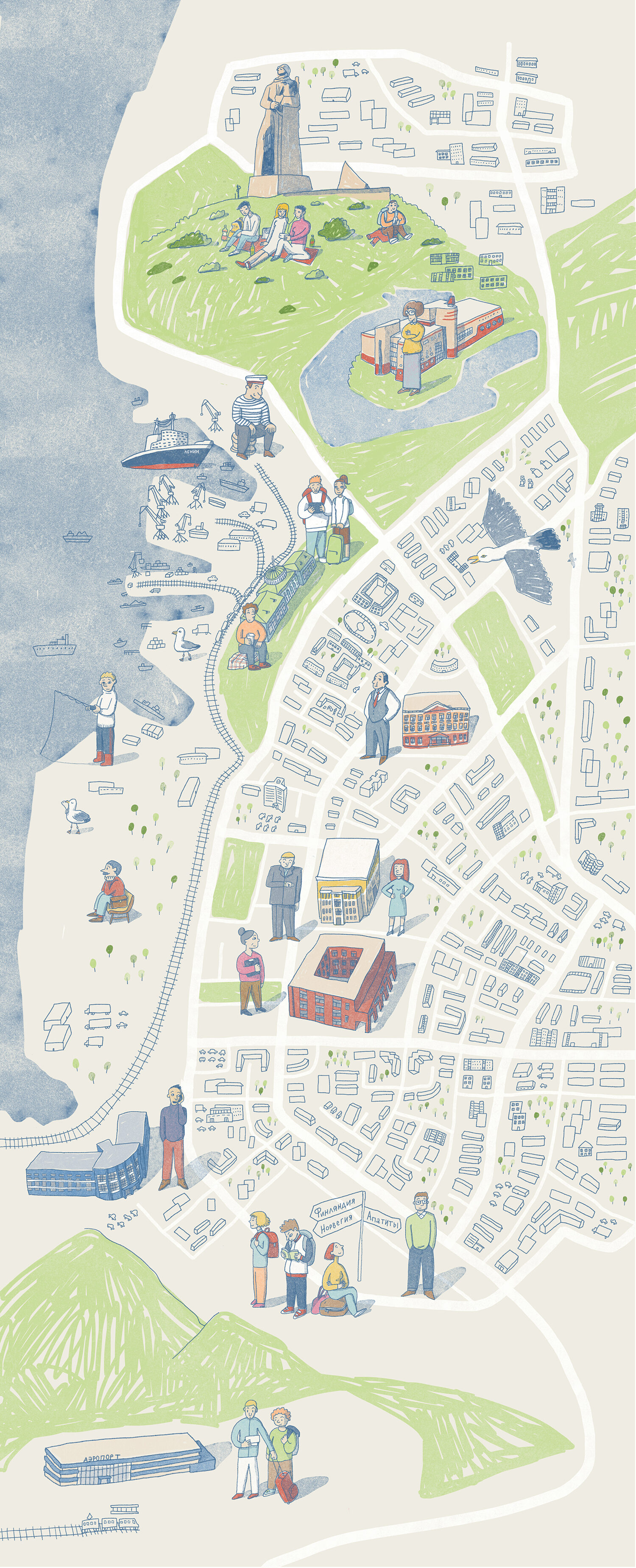
Disappointed students
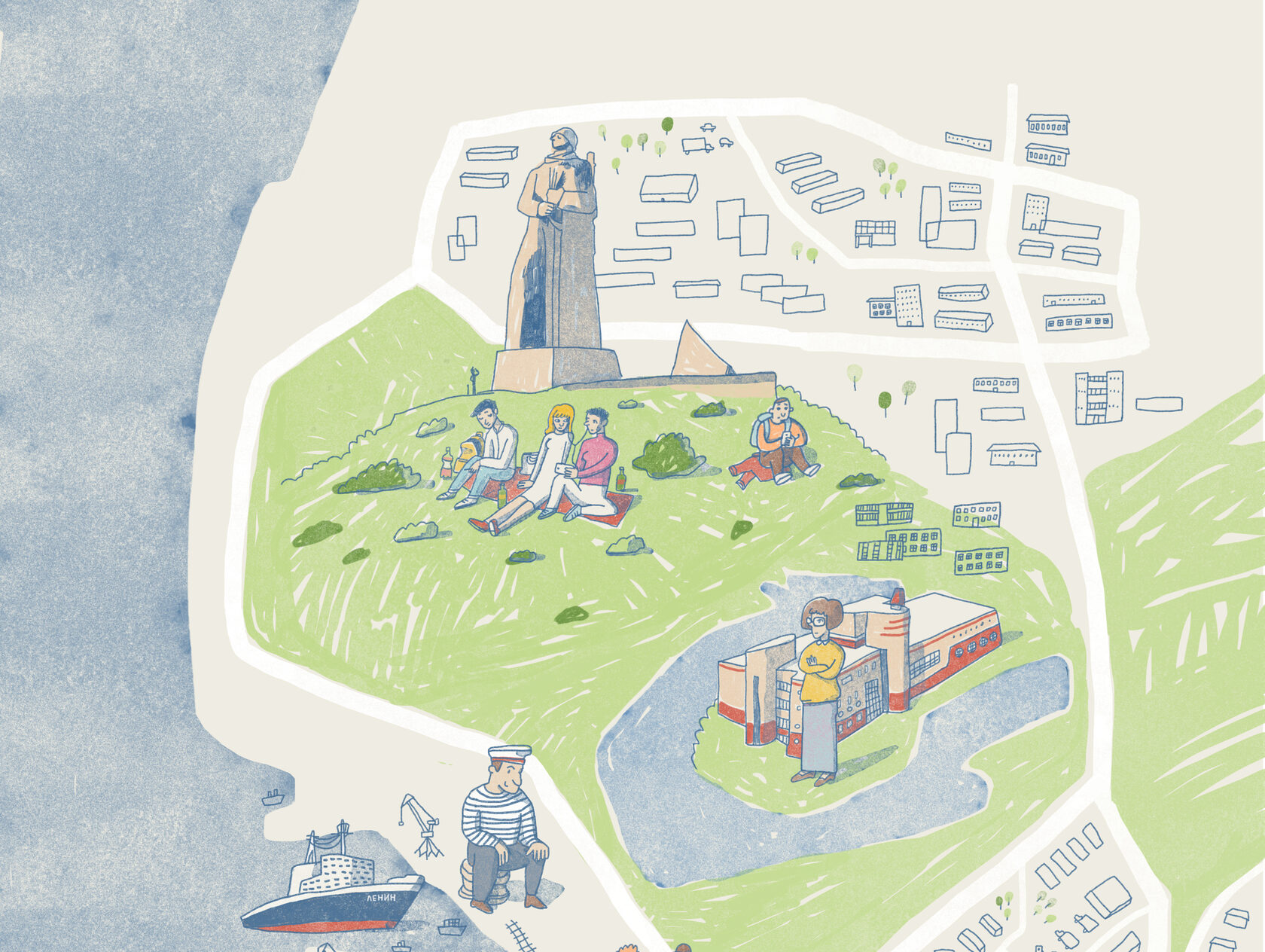
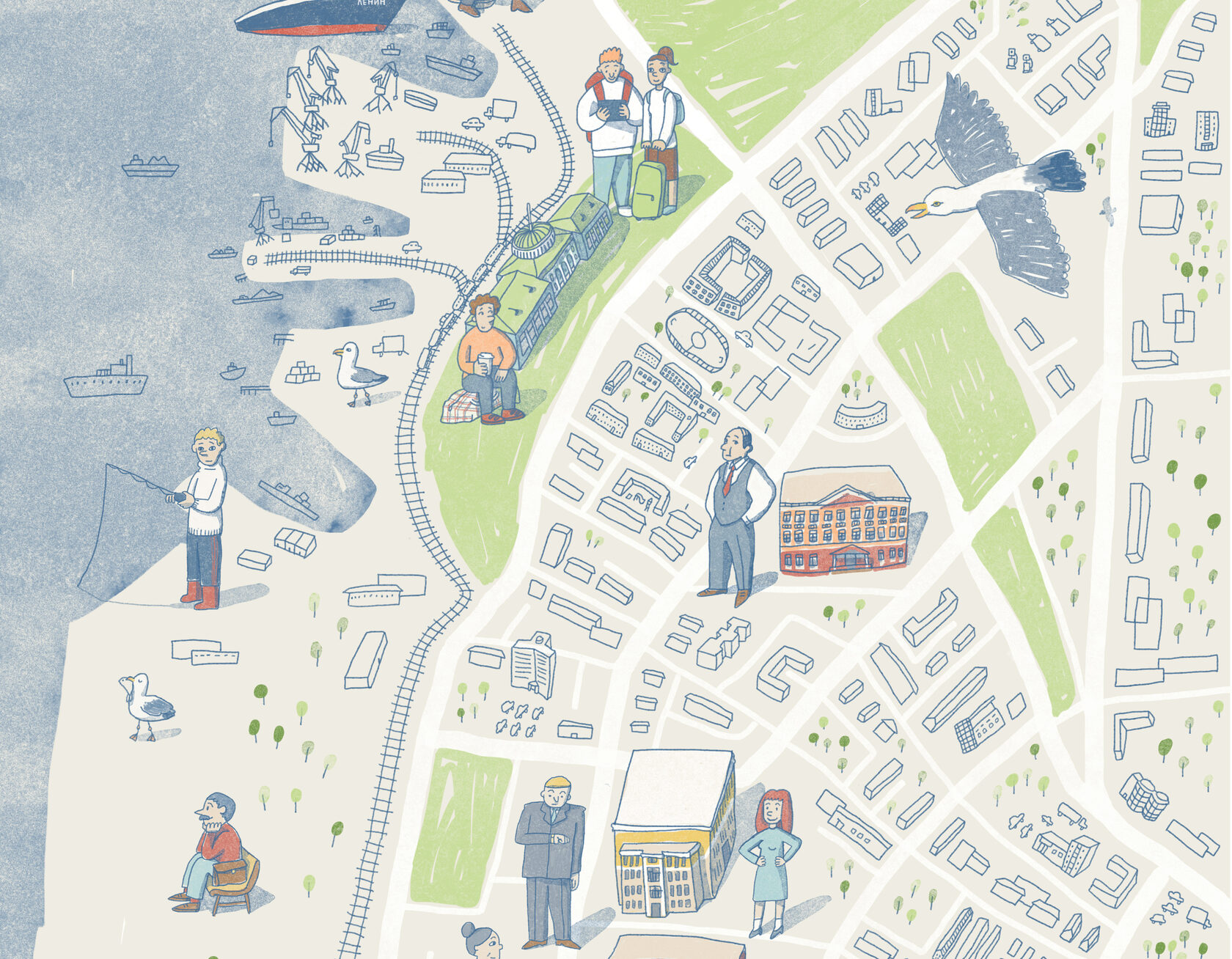
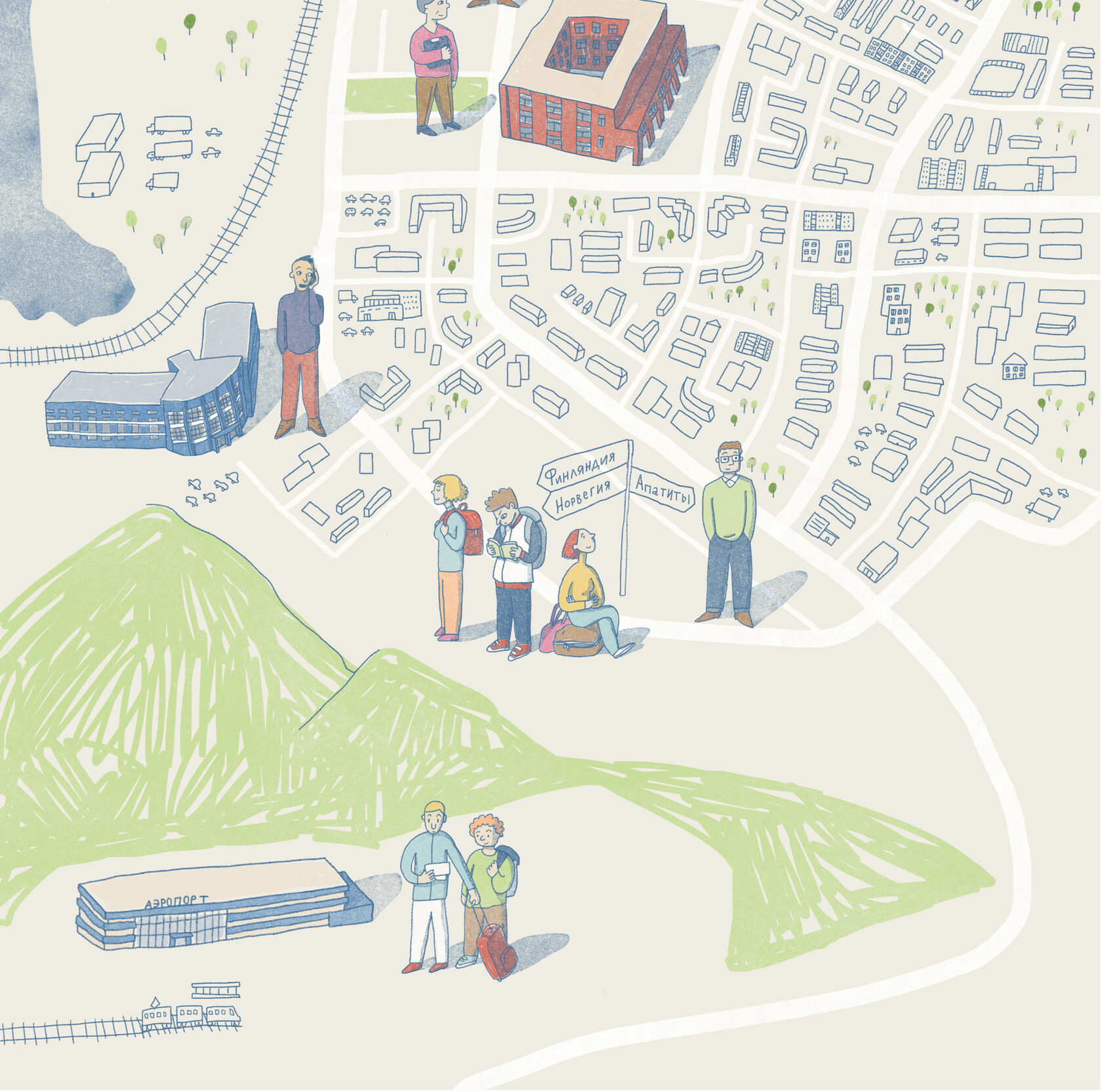
– I have not liked to study since my secondary school days. I went to the university for a show.
– My main entertainment is attending psychological training.
– There is nothing to catch here: the sea is the sea.
– I can’t hear about the Arctic anymore.
– Leninsky district is depressive, only drug addicts. The mall is the main meeting point.
– It doesn't matter what city you're in, they're all the same. You will come to Tver: there are exactly the same houses and exactly the same people walk there.
– My main entertainment is attending psychological training.
– There is nothing to catch here: the sea is the sea.
– I can’t hear about the Arctic anymore.
– Leninsky district is depressive, only drug addicts. The mall is the main meeting point.
– It doesn't matter what city you're in, they're all the same. You will come to Tver: there are exactly the same houses and exactly the same people walk there.
A student without ambition
MSTU... MAGU... They are like a fallback for me. But maybe I will have to study here.
Sailor
We had internships in all the cities where the ships are docked. Fish is given very often, and salads sometimes come with fish, so there are funny combinations for lunch in our Maritime academy, where you can taste fish with fish and with fish. I specially moved to Murmansk to study at the Maritime Academy. I had a relative from Murmansk who came to our house, told us about his flights, how he went to the islands there. And I caught myself thinking: “Damn, I didn’t even think about such an option”. I began to google on the Internet, looked videos about adult sailors. And they all say: “The profession is really hard”. But you can find difficulties in any occupation. Well, I thought: “I'll apply to the Maritime academy”.
Teacher of engineering additional education
Every child who successfully passed the Unified state exam is the result of the work by his or her parents and tutors. Here we have a swimming pool, a boxing ring, and mobile technology parks. In natural science quantriums, children study chemistry, biology, and physics. There are circles on radio engineering and 3D modeling. But in school, initially brilliant children are taught to think in a stereotyped way.
School principal
If our graduates can enter the universities of the capitals, this will be the best move for them.
Dreamy school teacher
The people of the North feel more acutely the fragility of the world. They are trying to preserve nature. Do you remember the lyrics “... beyond the Arctic Circle the snow is white-white”?
The polar night is, of course, stressful, but even on a polar day, the body is simply destroyed from constant light, the body cannot rest.
Our children are diagnosed with tracheitis from birth, and all have very poor eyesight.
There are more and more shift workers: if this continues, the city will die. When people come to Murmansk, they exchange their health for money.
Visitor from the region
I come from a closed military town where there is no higher education. I came to Murmansk because the city seems sincere to me. The goal is simply to understand what you want. It's complicated. It is not clear how to live on. The main thing is to finish college in order to enter a university. The main thing is the budget.
Foreign student
It was interesting for me to see the Polar day and the Polar night, and how people in the North live. I’ve read that in the North the sun does not set at all in the summer, and I was like: “It’s impossible!” I decided to go to Murmannsk, came and really: “This is true!” It is much more comfortable to live and study in the North, there is no relaxing heat here, and I can think much faster.
University teacher responsible for work with talents
My responsibilities include work to attract applicants to the university. There is a school for intellectual contest participants, A-Elite. There is the Arctic Resource Personnel Center of the Murmansk state university. In general, we do a lot. We also encourage those schoolchildren who have an active scientific position. Due to our school, secondary school students take places at the regional intellectual contests and even at the All-Russian. We are also engaged in career guidance for schoolchildren and students: before the pandemic, we went to schools, conducted tests and training there. Now everything is mostly online.
We have benefits for university applicants: those who apply and have more than 250 points for the Unified state exam we pay a large scholarship. But this is some kind of psychological moment. Sometimes it will be a pointless activity. We are no worse than other universities, but ambitious school students are encouraged to leave for Moscow or St. Petersburg.
We have benefits for university applicants: those who apply and have more than 250 points for the Unified state exam we pay a large scholarship. But this is some kind of psychological moment. Sometimes it will be a pointless activity. We are no worse than other universities, but ambitious school students are encouraged to leave for Moscow or St. Petersburg.
Schoolchildren with ambition
- I wanted to leave Murmansk somewhere in the 8th grade. Have you ever been in Moscow or St. Petersburg? Have you seen how everything is arranged for the townspeople there? There is no such thing in Murmansk. The level of comfort in the capitals is a hundred times higher than in Murmansk.
- After I arrived from the Sirius Educational Center, I noticed that my physics teacher sometimes makes mistakes during our classes. I decided to prepare for the intellectual contests myself.
- I have a wonderful, simply unique, Russian language and literature teacher. She taught me everything and believed in me. Thanks to her, I received a diploma at an All-Russian intellectual contest. And in general, all my classmates passed their exams well.
– I go to Murmansk state university three or four times a week. I am being prepared for the intellectual contests: the teacher explains to me the ancient Greek alphabet, vocabulary, and so on.
– I am working on my chemical project at the Laplandia Center, center of additional engineering education. I will go to the competition with this project very soon.
- After I arrived from the Sirius Educational Center, I noticed that my physics teacher sometimes makes mistakes during our classes. I decided to prepare for the intellectual contests myself.
- I have a wonderful, simply unique, Russian language and literature teacher. She taught me everything and believed in me. Thanks to her, I received a diploma at an All-Russian intellectual contest. And in general, all my classmates passed their exams well.
– I go to Murmansk state university three or four times a week. I am being prepared for the intellectual contests: the teacher explains to me the ancient Greek alphabet, vocabulary, and so on.
– I am working on my chemical project at the Laplandia Center, center of additional engineering education. I will go to the competition with this project very soon.
University applicants for whom there is no interesting major in Murmansk
– I love my city, but the universities don't offer the advertising and public relations majors that I want to do, so I'm planning to move.
– In the year of my admission, there was no recruitment for special needs educators, because there are so many such specialists in Murmansk.
– There were only two directions in the medical college: nursing and pharmaceuticals, and I'd like to go into surgery.
– Murmansk has a very specific labor market, but I want to be a pilot.
– In the year of my admission, there was no recruitment for special needs educators, because there are so many such specialists in Murmansk.
– There were only two directions in the medical college: nursing and pharmaceuticals, and I'd like to go into surgery.
– Murmansk has a very specific labor market, but I want to be a pilot.
Student activist
At school, I got into the patriotic movement “Youth army” and rose from an ordinary youth soldier to a detachment commander. This is because of my academic and sports success. And now at the university I am organizing competitions “Student of the Year”, “Mr. and Miss University”. These competitions help students to know our university better.
Murmansk students after an exchange program
Our university cooperates with two universities in Norway, with universities in Finland and Sweden. We thought it would be very difficult to get into the exchange, but in fact we just came to the international office and asked where we could go. As a result, five people went to Bodøa, two people went to Tromsø, and three went to Finland. It was so interesting how it is to study in an international environment. Everyone said that it is fundamentally different from studying at Russian universities. At first, there is not enough pressure, there is not enough iron shoe, you have to distribute your time yourself, otherwise it will be difficult. Not that it's bad, just different.
Fan of the Arctic
The Arctic can be compared to Space. There should not be something specific to belong to only one country. It is important to live in good neighborliness and treat each other with respect. At school we were told about the history of the Kola Peninsula, the ancient history of the region, and petroglyphs. And also, for example, we had to cook a Sami dish at the technology class, and at the literature lesson we had to understand the Sami writing.
University administrator
Winter sports are underdeveloped. But this is the potential of the region, the point of attraction! We need to develop arctic design, arctic tourism: we have famous Teriberka here. We are already actively engaged in Arctic education. Every year the university tries to modify the programs, based on thу needs of the region, and does not churn out specialists of the same type. The enrollment goes to standard bachelor's programs created in accordance with the codifier and state educational standards, but in reality, Arctic specificity appears in education. For example, students are recruited for the program “Logistics and Enterprise Management”, but they will study the work of the Murmansk Commercial Port, maritime transportation, the structure and arrangement of airports and roads in the Arctic region. Or, for instance, the “Service” program. One year they recruited students with a focus on tourism and hospitality in the Arctic region, in another year they recruited applicants with a focus on the restaurant business. Of course, applicants know all this and are inspired by such a decision.
Scientist from Academgorodok in Apatit
Our scientific center in Apatity is, in fact, a city-forming enterprise. There was no city yet, but there was already a scientific center. Young academic Fersman once saw here such a concentration of rare minerals that is not found anywhere else in the world, and, of course, the most valuable apatite. In 1930 he founded the first scientific station beyond the Arctic Circle. Then a botanical garden appeared, the first in the world beyond the Arctic Circle. During the war, the work of scientists in this area was equated to military exploits. And after the war, a new city already appeared, in the center Akademgorodok was. We, scientists, conduct research here, apply for grants, create international research schools. And besides this, we conduct a city lecture hall, where local historians, geologists, and biologists give lectures. We do sci-pop festivals. We conduct excursions “The Secret Paths of Academgorodok”. We even certify guides for ecological tourism in the Khibiny. Yes, all this goes beyond the scope of the immediate activity of a scientist, but this is the commitment of science to society.
Photo
О проекте
In July 2021, the Laboratory for University Development introduced HSE students to the field trip “Universities beyond the Arctic Circle: Higher Education and Science in the Murmansk Region” (Thanks to the HSE project "Let's Open Russia"). We conducted the study at the height of the university admission campaign and the Polar Day, in the midst of the abnormal heat for Murmansk, lilacs blooming in the middle of summer, to the round-the-clock cries of seagulls.
Ksenia Romanenko:
Read more
To understand higher education and science in the region, our students and we have chosen a whole bunch of focused topics: international scientific and educational activities in the Murmansk region as a border area, the everyday life of Murmansk students, including foreign ones, in the conditions of the Arctic, the role of the university in the city, the olympiad movement of schoolchildren in Murmansk and the Murmansk region, school-university transition, extracurricular activities of students. The work was carried out in Murmansk itself (at the MASU and MSTU), as well as in industrial Monchegorsk, the Akademgorodok of the city of Apatity, where scientific institutes are hiding in the middle of the garden and at a stone’s throw from Khibiny, and even in Teriberka, which is seen as the main tourist location, for which specialists are already being trained.
The field trip members found out how students from the Murmansk universities are sent to the Norwegian university cities of Tromsø and Bodø thanks to the Barents+ academic mobility program, positively assess the experience of living abroad, but note the difficulties in self-organization: without the “iron boot” of Russian education, it is much more difficult to force oneself to study.
Another case is the activity of the Kola Science Center in Apatity, where, in addition to academic work, KSC researchers organize city lecture halls, come up with popular science festivals, help teachers with advanced training, and even organize guide schools in the Khibiny.
The theme of the school-university transition, the educational ambitions of young people and the work of universities with applicants turned out to be one of the most lively and painful. At MASU, the Arctic Personnel Resource Center and the ArktikProf Career Guidance Diagnostic Center work with schoolchildren. Many circles and directions are in the Murmansk center “Lapland”. In “Fablab” in Monchegorsk, schoolchildren are engaged in robotics and design. Universities offer career guidance, educational consultations, and preparation for olympiads. Despite this, the educational trajectories of those very schoolchildren participating in the olympiads and project activities lead them to enter St. Petersburg, and not Murmansk universities. Applicants explain their choice by the undeveloped infrastructure of the city, the lack of perspectives, and the difficulty of living in the northern climate.
Yesterday's high school students from the region come to Murmansk to study. They explained that they often feel less comfortable compared to the natives of the city, are less familiar with urban spaces and opportunities, but compensate for this by actively participating in student contests and competitions, and generally devote more time to study and university. And universities, in order to be actual, are trying to tailor education to the needs of the Arctic region, offering both Arctic design and Arctic ecology as areas of study.
In our study of education and science in Murmansk and the Murmansk region, we collected many personal stories in which we can see the confrontation between schools orienting graduates to leave Murmansk and universities looking for strong applicants, we can see the inequality of the situation and the level of aspirations of students, we can see disappointments, professional efforts, dreams, and northern aesthetics.
In the statements of the characters of the article (somewhere made-up, somewhere directly copying the participants in the study), we offer to see these stories, conflicts, and inner roll calls. All quotes are taken from interviews with the expedition. And the cries of seagulls, we can assume, we just translated them into human language.
The field trip members found out how students from the Murmansk universities are sent to the Norwegian university cities of Tromsø and Bodø thanks to the Barents+ academic mobility program, positively assess the experience of living abroad, but note the difficulties in self-organization: without the “iron boot” of Russian education, it is much more difficult to force oneself to study.
Another case is the activity of the Kola Science Center in Apatity, where, in addition to academic work, KSC researchers organize city lecture halls, come up with popular science festivals, help teachers with advanced training, and even organize guide schools in the Khibiny.
The theme of the school-university transition, the educational ambitions of young people and the work of universities with applicants turned out to be one of the most lively and painful. At MASU, the Arctic Personnel Resource Center and the ArktikProf Career Guidance Diagnostic Center work with schoolchildren. Many circles and directions are in the Murmansk center “Lapland”. In “Fablab” in Monchegorsk, schoolchildren are engaged in robotics and design. Universities offer career guidance, educational consultations, and preparation for olympiads. Despite this, the educational trajectories of those very schoolchildren participating in the olympiads and project activities lead them to enter St. Petersburg, and not Murmansk universities. Applicants explain their choice by the undeveloped infrastructure of the city, the lack of perspectives, and the difficulty of living in the northern climate.
Yesterday's high school students from the region come to Murmansk to study. They explained that they often feel less comfortable compared to the natives of the city, are less familiar with urban spaces and opportunities, but compensate for this by actively participating in student contests and competitions, and generally devote more time to study and university. And universities, in order to be actual, are trying to tailor education to the needs of the Arctic region, offering both Arctic design and Arctic ecology as areas of study.
In our study of education and science in Murmansk and the Murmansk region, we collected many personal stories in which we can see the confrontation between schools orienting graduates to leave Murmansk and universities looking for strong applicants, we can see the inequality of the situation and the level of aspirations of students, we can see disappointments, professional efforts, dreams, and northern aesthetics.
In the statements of the characters of the article (somewhere made-up, somewhere directly copying the participants in the study), we offer to see these stories, conflicts, and inner roll calls. All quotes are taken from interviews with the expedition. And the cries of seagulls, we can assume, we just translated them into human language.
About authors
Artist, illustrator of the books “Like me. Diary of a Super Cool Warrior” (2021), “Women's Story for Children. Natalia Gorbanevskaya” (2018).

Nyusya Krasovitskaya
Researcher of higher education and contemporary culture, expedition leader from the Laboratory for University Development, National Research University Higher School of Economics (2018-2022).

Ksenia Romanenko
Primary selection of data: participants of the expedition “Universities beyond the Arctic Circle”, students of the National Research University Higher School of Economics Veronika Belyaeva, Danil Zhikharev, Polina Myakina.
Photos: Mikhail Razumov
Technical assistance: Ilya Vorontsov.
Professors and participants of the expedition “Universities beyond the Arctic Circle”: HSE staff and students Daria Platonova, Alexei Egorov, Amina Huseynova, Lev Levitsky, Artemy Mironov, Natalia Skorokhodova, Ekaterina Tsybanova.
Photos: Mikhail Razumov
Technical assistance: Ilya Vorontsov.
Professors and participants of the expedition “Universities beyond the Arctic Circle”: HSE staff and students Daria Platonova, Alexei Egorov, Amina Huseynova, Lev Levitsky, Artemy Mironov, Natalia Skorokhodova, Ekaterina Tsybanova.